““Someone is sitting in the shade today because someone planted a tree a long time ago.” – Warren Buffett
Introduction: Legacy as Presence
Recently, my Podcast Partner on Open Doors and I, Lauren, recorded an episode and in it we added a segment called, “What’s on my Mind.” I had spent that morning as I normally would, listening first to “Morning Brew Daily,” followed by The New York Times, “Daily” Podcast. That morning on the Daily, was a recap of Charlie Kirk’s memorial where his wife Erica Kirk so elegantly forgave his killer, in the name of her husband’s work and her own belief system in her relationship with God. As I listened to her words and thought about the tragedy that was the loss of life for this young man and his family, the word that came to mind for that moment for her, for her children, and for him, was legacy. Legacy, a word that sits somewhere between the personal and the universal, and these past weeks have reminded me that legacy isn’t about titles, awards, or wealth. Legacy is about how we consistently show up in the world. It’s written in our choices, our presence, and the spaces we create for others.
Gary Vee often says: “You are writing your legacy every day.” I believe that’s true. We all get the chance to write our legacy every single day by how we live, how we treat people, and what we choose to build—or disrupt.
For me, this post is not a piece or a space for anything other than acknowledging, we all get one life, we all get one chance to be humans on this earth as part of a community of people. People with thoughts, opinions, opportunities to action, ways to show up and leave this space better than we found it. There are countless people who have built and shaped legacies, some quiet and others loud, but that’s the thing about legacy, we all build our own. The people I have chosen to highlight have struck me in their actions, in their intentions and what they did (and in the case of the 95 year old Warren Buffet) are still doing.
The Wisdom of Letting Go: Warren Buffett
I started writing this post 4 weeks ago (good things take time and this one is a bit heavy and I was nervous), and had intended to include Warren Buffet in this post in the context of harnessing your legacy while you are still here to make daily choices and also knowing when it’s time to let go. Then 2 weeks ago, October 3, 2025, a major news story hit the wire: Berkshire Hathaway’s acquisition of Occidental Petroleum’s chemical division, OxyChem, for $9.7 billion. To me this suggested many things, but one is that 95 year-old Warren Buffet is still very much stewarding the legacy of the company he built, even while practicing the art of letting go. In the acquisition, is both the heart and science of one of the most legendary business men of all time doing what may be his final deal.
For context, Buffett has seemingly struggled to find attractively priced major acquisitions in recent years. The deal is a the use of Berkshire Hathaway’s substantial cash reserves, which have been growing and notably speaks to the pending leadership transition as the announcement materials for the deal did not include Buffett’s name, instead quoting his successor, Greg Abel, who will take over as CEO in January. A brave new chapter for all.
To me, Warren Buffet is a masterclass in the complexities and opportunities of the crafting your legacy in action across dimensions and phases of life. The series of moments, chapters and choices. Family, business, personal pursuits/interests, giving back are not always in lock step, and if we are honest, almost never are they congruent. I have learned, life is a series of tradeoffs and legacies are not made up of just spontaneous moments – they are a connected and also disparate series of choices. He focused much of his life on being a businessman and this deal will be the one, that last BIG one.
But, in digging deeper, he is so much more and his unique arrangement with his wives and 3 children will live on through his role as a philanthropist. In 2024, he announced that, after his death, his donations to the Gates Foundation will cease and where he had given given billions of dollars in stock to the foundation over since 2006, significantly expanding its resources for global health, poverty, and education initiatives. After this passing, the bulk of his remaining fortune will be managed by a charitable trust overseen by his three children, who will have a decade to distribute the funds. Additionally, In June 2025, he doubled-down on his own distribution of his philanthropic gifting and made one of his largest single donations to date, giving away approximately $6 billion in Berkshire Hathaway stock. All separate moments in time, but all connected to a vision to ensure that his children have a direct role in his philanthropic legacy, and his impact will live on to serve future generations.
“The decision to keep every share is an economic decision because I think the prospects of Berkshire will be better under Greg’s management than mine.” – Warren Buffett
Source: CNBC
He has written and curated this chapter to leave his family, his business and the causes he cares deeply about in way that he can both architect, protect and be proud of in the hands of people he trusts, and in a way that he believes will better society. He is legendary for his business acumen, and it’s no surprise that he would choose how he would leave the business he founded, nurtured and grew to one of the most successful companies in the world which is why I am so interested in his retirement announcement is as it was a different kind of disruption—the quiet disruption of humility. After six decades at the helm of Berkshire Hathaway, he chose to step back and hand leadership to Greg Abel. His choice not to mention himself in his final acquisition and business deal shows us that legacy isn’t only in the numbers (though they are staggering), but in his wisdom: knowing when to step aside.
The Quiet Power of Storytelling: Robert Redford
When Robert Redford passed on September 16, 2025, the world didn’t just lose an actor—it lost a visionary. Yes, he gave us unforgettable performances in Butch Cassidy and the Sundance Kid and All the President’s Men and my personal favorite Up Close and Personal ( yes, I was inspired by Michelle Pfeiffer and I did get a bob cut after this movie). But his most enduring contribution was Sundance: a platform that empowered independent voices who would otherwise have been silenced.
That’s the essence of positive disruption. He didn’t lobby against a system or yell at it or about it —he leaned in with curiosity and grace and he expanded it. Not only did he do it through creating a forum for these films and film makers, he literally created a space. Named after this famous character in the film and his resort in Sundance Resort, just outside of Salt Lake City, The Sundance Institute was formed in 1981 to support independent film makers. In addition to the establishment of the institute, he had been involved with the Utah/US Film Festival in Salt Lake City which was established in 1978, and later its move to Park City in 1981. In 1985, when the Sundance Institute officially took over operations for original Utah/US Film Festival the festival was officially renamed it the Sundance Film Festival. By creating space for filmmakers like Ava DuVernay and Ryan Coogler, he demonstrated what happens when cognitive diversity thrives: storytelling becomes richer, more inclusive, more human.
Source: Sundance Institute
One of Robert Redford’s most famous quotes about the Sundance Institute and Film Festival encapsulates his core mission:
“For me, the Sundance Institute is just an extension of something I believed in, which is creating a mechanism for new voices to have a place to develop and be heard.”
As Barbra Streisand said: “He was charismatic, intelligent, intense, always interesting—and one of the finest actors ever.” And yet, his greatest role may have been as a builder of platforms where others could shine.
On a personal note, in 2016 I was invited to go the Sundance Film Festival as part of Brand Storytelling. I had never been and I didn’t even really understand exactly what is was at the time. From the moment I arrived in Park City, I was instantly captivated. The air felt different. As if somehow, we were now breathing the oxygen of creativity. The ideas that bring new stories and storytellers to the forefront and let us imagine new worlds, voices and new paradigms. It has truly become one of my favorite events every year. Countless memories of learning new things, laughter over stories pitched late night over whiskey and beer that would never see the light of day, and countless adventures untold. The hills and Main Street in Park City are vibrant and buzzing with the energy of self-expression and passion, however this too will now be part of Park City’s legacy. Beginning in 2027, Sundance will move to Boulder, Colorado making January 2026 the final Sundance Film Festival in Park City and will surely be the most poignant in a tribute to the lasting legacy of Robert Redford.
Science Reimagined Through Empathy: Jane Goodall
I was saddened when Jane Goodall passed away two weeks ago. As the world-renowned primatologist and anthropologist, best known for her groundbreaking, six-decade-long study of wild chimpanzees in Gombe Stream National Park, Tanzania. The images of her interacting with the purest joy and acceptance of her beloved Chimpanzees will never be forgotten. She was unconventional. Her methods were different that that of her industry, which is what made her so special and ultimately successful. She was much more than a researcher and scientist, she was attuned to what it means to be part of an ecosystem. That one thing or organism is not better than another, that we are all equal as we all play a role in how our planet operates. In her space, she was patient, open and curious and she demonstrated to an entire community and beyond how empathy can create portals of understanding and learnings we didn’t know existed. Her approach and methods were not only dismissed they were criticized. Different than her counterparts and traditional methods, she believed in giving the chimpanzees names instead of numbers and documenting their individual personalities and emotions, and they responded to her in kind because she was kind to them. This approach changed an entire methodology and course of study as it is now a cornerstone of modern animal behavior studies.
She didn’t just show up for her research. she was also an advocate for environmental and wildlife conservation, traveling extensively to speak about threats to the natural world. She founded the Jane Goodall Institute in 1977 to continue her work, and the global youth program, Roots & Shoots, in 1991. The connection between the animals she loved and the habitats they and we occupy and inextricably linked and instead of just talking about these things, she took her platform and learnings and created something that would outlast her.
Jane Goodall had the courage to think differently and. more than that, she had the courage to behave differently. She was honored in several ways throughout her life including being named an UN Messenger of Peace, and an educational achievement of being one of the few people to be admitted to the University of Cambridge to pursue a Ph.D. without first earning a bachelor’s degree.
As a mother of a 12 year old girl, I want her to know the legacy of Jane Goodall. The one that not just tells her to have courage and believe in her own ideas and dreams, but demonstrates how her ideas and dreams can come to life through actions taken. Jane Goodall has inspired generations of girls and women to puruse science and conversation while giving them the tools and resources to make it real.
“What you do makes a difference, and you have to decide what kind of difference you want to make.” – Jane Goodall
Source: National Geographic
Like Redford, Goodall reminds us that legacy is not only about impact in the moment, but about creating ecosystems that endure.
The recognition that positive disruption sometimes comes from letting go, from trusting others to take the reins.
Prompting Discourse and Holding Space Becomes Legacy: Charlie Kirk
The assassination of Charlie Kirk on September 10, 2025, was a tragic reminder of the fragility of spaces for human life, dialogue, and discourse. Whatever your politics, his willingness to show up and engage — even amid deep disagreement — reflects one kind of legacy: showing up. Campus after campus, he created rooms where ideas collided and conversation happened.
In this particular part of this post, I feel the need to make the point that I chose this story very specifically. and with some hesitation. I don’t like political conflict, and the thought that people may show up in my comments and say things, or that they may erroneously judge me without knowing me, makes me uncomfortable; but, in that I realized, by not writing it, then I am also self-silencing (or avoiding) a topic that is important to me, showing up and how that impacts legacy. So here I am.
What I do appreciate is productive debate and discourse. It’s where I learn and grow and am able to see the other side of data points or experiences I may not have had…or maybe the same experience internalized through my own lens. Those thoughts, ideas and POVs may even make me uncomfortable but they make me think and I appreciate when the people can share without the need for coercion, right or wrong, or berating, just sharing of ideology with the return ability to listen and try to understand other ways of thinking or experiences. For me, legacy isn’t defined by accolades or shouting, or even what he said, because they were his opinions and in a world filled with a sea of opinions- these were his take and alignment on issues and agreement is subjective. The agendas and platforming will bow to the next media headline and cultural moment, but his death and his legacy can be honored by his presence— his actions to try to engage where it mattered most – including his family.
Legacy through discourse is cognitive diversity in action: choosing to stand in the hard spaces, to lean into conversation even when it’s uncomfortable. His loss reminds me how important those spaces remain, how college campuses should be a safe place for discourse, and how we can engage around “how to think, not what to think.” Erica’s memorial speech reminds me that every moment is a moment to write your legacy and ultimately our life is a series of moments and choices. She reminded all of us in a moment that was so painful for her, a moment where other people had their own experience of his death and his service meant something different to each person present, she was part of his legacy. She was the steward of his legacy for their babies and she stepped into the moment of writing her own legacy for herself and her family.
If you are still with me, thank you for staying. This is last section but for me and maybe most of us who aren’t celebrities or influencers, but we are people…this is for us.
Legacy in the Everyday
All of this said, I think for most of us, we can deeply understand that not all legacies make headlines because we have family members and friends, or people we have known in our lives who forever leave a mark on our hearts. I don’t know that I had thought about legacy in this way, even though I had lost my beloved grandparents on my Mom’s side in my early thirties. Their legacy lives on with me in my memory of them; but it wasn’t until my Dad said to me once in the context of his friend who he was caring for and had Cancer: “Nobody wants to be forgotten.” I could never get his words out of my head, and a year later I was sitting with him and my Aunt Bonnie at my Aunt Willa’s funeral. Willa was like a mother to my Dad. 11 years older than him, she had stepped in to take care of him and his siblings when times were hard with my grandparents who were struggling to care of their children. Willa and Steve, and their children, lived in San Mateo and had a house on the lake in Clear Lake. Our family wasn’t close in distance and reunions were scarce, but I treasured lake visits and sitting around listening to stories of their childhood. Understanding where my Dad came from helped me feel closer to him, and Willa in her scratchy throaty voice would share endless stories somehow in the recounting of a lost childhood, she could still create a sense of home.
My Grandpa had worked in the mines and on the railroad and struggled with alcohol, so the kids, who were separated by several years with 2 of the 5 having cognitive disabilities, were spread out across geographies in order to ensure they had care. The stories were ripe in the stories with the ripple effects that affected generation that endured The Great Depression (addiction, poverty and hard-working people and resilience). From the stories, it was also clear that Willa had stepped up and in to create safety and love for her siblings. I don’t know what I expected Isitting in the pews of the church at Willa’s funeral next ot my Dad, just before the world shut down for Covid, but when my cousin John, her oldest son came to the podium to deliver her eulogy and said four words. “My mother is love.”
She is love. I immediately burst into tears at his words. Goose bumps flared all over my skin. It was so beautiful and I could feel his words in my soul. I could see Willa in my mind those times at Clear Lake. Bustling around the kitchen, telling us what to do to help before we could go outside and race around the lake on their jet skis. Her laugh. The warm affection she had for everyone she would look at when we were visiting. Her soft, tan arms wrapping around you for a warm hug and small shake to say, “how are you, you’ve gotten so big.” Racing into crystal clarity, I flashed forward to my own moment of passing and I knew in that moment watching John, I hoped my children would say that, and believe it. That I am love. That somewhere and in their lives, I showed up and gave to them and those around me love. That they would feel the light like a warm fingerprint on their hearts to know I will always be with them. I often think about E and what will happen for her as we currently build out her future plan now that she is 16. Noone handed us a roadmap or a playbook for how to have a child with significant disabilities. How a marriage can end but you can still be partners in every sense of the world with your children as your North Star. So that love is their compass. We collaborate to figure it out, but we know that ultimately our legacy will be how we support her, how we allow our Q and M to now have to own the experience of caring for her, but to want to lean in and advocate and spend time with her to include her in the lives of their own families and children after KSP and I are gone. These are the things that I think about in the wee hours of the morning. The ones that pull the threads of my heart knowing how important they are, and yet sometimes fearing the gravity of their impact. It’s the trees in the forest, that sometimes I cling to one by one, until I can see the path and throw myself forward toward the unknown.
In one of our Open Doors Podcasts, we interviewed Maha Abouelenein about her book “The 7 Rules of Self Reliance.” In our interview, she said something I will never forget as we discussed her courage in caring for both of her parents who were suffering debilitating illnesses as she was just a young woman and trying to care for them – she would ask herself everyday, “what can I do to make their day better.” That is love. Some days it’s an extra hug, some days it’s sitting quietly, some days it’s bouncing on the trampoline, some days it’s doing for a walk or it’s shuttling them somewhere, or making a meal they like, or just listening when THEY are ready to talk. That is love. Love is them knowing they are the North Star and you set the direction to your love is always with them no matter where they go.
We will also have different experiences. Our paths, ways, influences and outputs will be diverse; but, we get to choose how we show up. Like my Aunt Willa, her legacy wasn’t tied to professional success; her legacy was in the fabric of the daily ways she showed up with love. Aunt Willa reminds me that being remembered isn’t about what you’ve done, but it is how you show up and make them feel.
Closing Reflection: Legacy as Daily Choice
Legacy isn’t reserved for the famous, the wealthy, or the powerful. It’s something we shape in small ways, every day —through our choices, our curiosity, our courage, and our love. Robert Redford, Jane Goodall, Warren Buffett, Charlie Kirk, Erica Kirk and Aunt Willa remind us that legacy is not about being remembered for achievements, but for how we showed up in big and small ways, and if we are able how we can create in service of something bigger than ourselves.
To Q, E, and M, I hope that one day, you read this post and though you may never totally comprehend how much I love you, you know that in your hearts, for you, I make big choices and small ones daily that I hope one day, you will also say, “My Mother is Love. ” And, if I do this right, you will also feel that our family has left something in Quinn’s Cocoa $4 the Cure and in honor of people with Angelman Syndrome (and maybe something to come) that lived in service of something bigger than ourselves. You are my North Star, my compass, and the role I am most proud of in this life, no matter how long it lasts, you are my legacy. You are my loves forever and ever from wherever we may be and as you know:
“I’ll love you forever, I’ll like you for always, as long as I am living my babies you’ll be.” – Robert Munsch (and beyond).
For all of us for this moment, is not What will our legacy be? but How will we show up today? Here we go. Close my eyes, deep breath, and hit publish.
Let me be clear, I love the Sports Business. It’s why I write so much about it. Love the players and love the game. Why? Because, it’s a space for real people to feel and be a part of real fandom. Where they put aside other the other things that might keep us apart and celebrate or commiserate around wins and losses, some felt so deeply they bring us to tears. But sports is a business and more than ever before it’s big business. Technology, access, new business models, athletes and globalization are changing the game literally and metaphorically.
But it wasn’t always this big. Depending on when you were born, you might remember when, sports was a family event? When it was simple in so many ways. It had all the ingredients of something that brings us together to create the tale our shared passions uniting us for the love of team, country, player, or memory. Whether you were in a big city or small town, you could gather with your family and friends and community to cheer on whatever the big game meant to you. Sometimes it was a daytime or nighttime outing and sometimes it was just around a screen in someone’s living room. But that was at a time where there were many other constants in the sports industry, in the distribution business, in consumer behavior and most importantly perhaps profit modeling and revenue forecasting were largely consistent over time.
But in all that simplicity and if you were reading the tea leaves of content, programming, studio models, distribution consolidation, audience fragmentation, escalating media rights, teams moving conferences in droves, and investment from all over the world into the new leagues disrupting existing ways of monetizing and doing business, even then we might not have known that we would be exactly where we are, this week today.
In their way, all those moments of nostalgia, gathering, following team, social media connection, athlete connection, media access and scrutiny were the foreshadowing of the last domaine for live eye balls. The holy grail of monetization. Last week, Netflix paid $5B for the rights for the WWE, today it was announced that Warner Discovery, Disney and Fox launched a sports streaming platform, Hulu of the days of yore anyone? And, (excitingly), Disney just committed to an 8 year $920MM rights deal for the NCAA which will provide exclusive coverage for 21 Women’s Sports Events and 19 Mens. The rights for sports are creating entirely new paradigms and if the IP/League rights for distributors to stay competitive are trying to figure out how to afford the rights? Because the future is so bright for Sports League, we will all need shades. What do I mean, for all you basketball fans out there according the Wall Street Journal article on this subject, “some experts expect the NBA to command three times its last deal, which would mean a rights package worth about $78 billion over a decade.” Let the shell game begin because the waning cable and MVPD model, forcing studios to stop battling for acquisitions by buying rights and band together to afford and monetize the eyeballs and everyone still has to report earnings.
The $100 million dollar NFL playoff game by Peacock showed that while people tried to figure out how to to get Peacock, once signed up, the other programming behind it is the opportunity to keep them there. The desire for fans and consumers to chase down games and their teams would wane quickly so arguably bringing together Fox, Disney and Warner Discovery where programming will be available to Max, Hulu, Espn + to watch all the channels owned by those companies that show sports, like ESPN, TNT and FS1, but also ABC and Fox is a smart one for the Studios/Networks/Streamers. According to the New York Times, other programming will also be available to subscribers so as to be able to watch nonsports shows like “The Simpsons” and “The Bachelor, etc. Subscribers will have access to 14 channels in total, as well as ESPN’s existing streaming service, ESPN+. According the Wall Street Journal article on this subject, “some experts expect the NBA to command three times its last deal, which would mean a rights package worth about $78 billion over a decade.”
Working in marketing, media and advertising, we also know the monetization of this new union is an important one. It will be interesting to witness the pricing as brands and advertising will surely be a significant portion of forecasted revenue. The upfronts of streaming? Which were the New Fronts, until they got bundled back into the upfronts So many questions. What will happen with all the fronts?
But the pricing war for people and eyeballs isn’t just happening on TV, if anything the real world might be exacerbating this scenario. Funflation.
Today Linkedin News Editor Bobby Armstrong shared this article outlining the rising cost of fun.
According to Bobby’s article, “Attending a sporting event these days is not for the faint of … wallet. In 2023, it cost $631 (including extras) to take a family of four to a National Football League game and $266 for Major League Baseball, according to CNN Business. Because major sports leagues make 66% of their revenue from TV deals, teams “don’t care if families can’t afford the seats,” said one analyst. Instead, they’re supplementing that TV money with “dynamic” pricing and a cut of secondary-market sales. Cheap seats? Forget about ’em.”
Even looking at the upcoming Copa America tickets in the US at Sofi. The cheaper tickets are hovering around $250. Like many Americans I am excited to go and take my family, but for the cost of $1000 for a family of 4, that’s a big Saturday!
What is likely is that while rights gobbling will continue, and people will still want sports, life is getting more expensive. Subscription overload, streamers are basically using a broadcast model for advertising, funflation is still in effect but for how long with real inflation still being an issue.
The push pull for marketers will continue as they look for the faces, spaces and places to connect with audiences without compromising brand experience and the measurable outcomes for their investment. The walled gardens continue to proliferate making strategy and relevance of the creative and media experience increasingly important in these environments while being aware that consumers ultimately just want to watch and engage in what they care about, in this case the sports, teams and athletes they love.
More announcements, more consolidation, and more shifts are sure to come, and it’s going to be a wild ride!
“Dare to declare who you are. It is not far from the shores of silence to the boundaries of speech. The path is not long, but the way is deep. You must not only walk there, you must be prepared to leap.” –
Hildegard Von Bingen
Is this authenticity? What is authentic?
Let’s go to the source, shall we because ooohh, how I love a good definition.
Since last Monday’s announcement about the word of the year, I haven’t been able to stop thinking about it.
Authentic.
The word is selected for the number of times it appears in search and well, what a year it was for this word.
In the advertising, media and marketing business we have used (potentially overly-used) the word for years around the notion of making real connections with consumers and the importance of that in building relationships that build brand affinity, loyalty and ultimately the choice to purchase. The explosion of influencers and the creator economy became the next qualifier for what does authentic connections mean? How do they relate to their audiences, how do brands play a role, when is it authentic and when is it forced?
In this context though, cracks started to show. Words like DNA, values and essence set the table for words like authentic or authenticity for the extrapolation of words like pure or genuine. While words like belief of conforming to swirl in the actual definition. Perception is reality, what’s real and what’s not?
Having spent the better part of my career in some version of storytelling not just for with and and brands but in my own personal writing on “Mynewfavoriteday,” I have struggled with the proliferation of the word. Personally, at the intersection of what feels like a dilution of meaning based on how often it’s used and reconciling that emotionally of what I believe its meaning so much so that I have mostly stopped using it professionally, defaulting to words such as genuine, true or honest.
When everyone is using the word authentic can everything possibly be so authentic? That’s the question.
In 2023, the masses of Americans agreed and searched the term up so many times that it became Miriam Webster’s word of the year. But why the big increase?
AI, Deep Fake, Taylor Swift, ChatGPT, social media and pop culture all provoking conversation around performative vs real. Authentic voice, depiction, representation, connection all being explored to understand our curiosity and desire to know if we can believe what we see and hear.
Speculation abounds. But if perception is reality then we are at the cross roads of authentic being open to interpretation. I believe authentic is a feeling. You head cannot tell you what authenticity is, only your heart and your intuition.
How do you feel when you are deeply within yourself? Perhaps having come out of experiences that often exist somewhere between the silence of feelings and thoughts and our ability to speak and live them. From the challenging experiences becoming our greatest opportunities to find gratitude for who we are becoming, who we have with us on the journey and the experiences and opportunities we have…even when they are hard.
The word authentic self is being used all the time, but if you deeper than the word I believe it’s about who you are, what you stand for and how you show up in the world. Noone can really define or tell you what’s actually authentic because you have to perceive it for yourself and then choose. Sometimes we get it wrong.
In 2013, I did my first content strategy for a brand. I didn’t really know exactly what I was doing or why I wanted to do it, but having been in sales and storytelling in Branded Content and experiences for Fortune 500 brands and massive commercially successful shows like American Idol, America’s Got Talent, The Apprentice, Contender and Rockstar, among many others, I quickly learned the success of brands is to understand your own brand values. How can they be articulated in what they are what they are not. How does that behavior show up in the world and how are you creating real value for the person you are trying to connect with in that moment. This where you all can see the true intersection of great leaders and how they steward these values into culture.
What I so appreciate so much in the last few years with all that has happened in the world is that so many people and brands are standing in their truth. Letting people behind the curtain of how we are supposed to be and into the space for who we are. We have been in one another’s homes via Zoom, we have met one another’s children and pets. We see their laundry on the table, hear dogs barking and we laugh together as we all forget how to take ourselves off mute. In these moments we get to be who we are as our real selves.
No matter the context, I think authenticity lives in a world of curiosity and understanding. Not rushing, not trying to contrive a situation or experience for someone including yourself. Just to be and understand the path does not have to be long but it is deep.
Where we can see this in great leadership. The people who have been to the depths not typically because things were going great but because life had a plan to show you who you are what you are made of as a path to understanding your purpose. Most often we never know what someone is going through when they are going through it but if we are paying attention we can see it when they come out on the other side.
My personal journey is one of discovery and understanding. From my experiences with my children I was pushed, pulled and shoved in a reconciliation with myself. This parlayed itself into every area of my life. A series of disruptive events in life taking me deeper into self. Hiding in my work was my identity, my source and the place where felt safe, but it wasn’t until I left what I thought would be my dream job as the Chief Marketing Officer The Honest Company that a full circle introspection. My safe space had been disrupted and I felt sad, I felt like I had failed and I felt like I had let myself and everyone down. It was in this place I had to fully reconcile the difference between ego and confidence, between what others think about me and I what I thought other people thought, and what I felt that meant for who I was to myself and others. It was in this place I could finally be free.
It was here that started the other work. What did I want in absence of titles and status. What made me excited, how did I want to feel in my job, what were the specific things I love to do and light me up. Strategy, making connections, building things, being creative, connecting people for the purpose of creating a relationship and value for others, doing work that is purposeful and lives in service of a greater good, cultural good energy….all of these things became my guiding light and how I knew I could thrive.
Our authentic self is the one that can bring all of these together. We talk about imposter syndrome a lot but this exercise is one where you can also value yourself and be grateful so that you don’t feel like an imposter.
With so much transition going on in the tech, media, advertising, marketing space and the world, there is a lot of searching literally and metaphorically. Lately, having spent a lot of time chatting with people recently as they look for their next opportunity, this word authentic is the one that always comes up. My counsel is to make the list, do the work, find something you love to do, recognize the feeling of what brings you excitement, joy, and alive. Being honest with yourself about what you are good at, what you love, where you might stretch, what gives you all the feels, not for your ego but because it brings you joy.. And even though my kids think I am a little “woo woo,” I believe that once you are clear, the Universe knows what to bring you and then it’s up you to act and be open.
Authenticity waiting in your own curiosity and understanding is real. It’s genuine and it’s here where the feeling is of the word of the yea exists. Dare to declare who you are for yourself and to yourself, it can unlock a world of possibility you didn’t know existed.
Happy Holidays! All the warm and fuzzies for the Season. ❤️ Shannon
Without change, there is no innovation, creativity, or incentive for improvement. Those who initiate change will have a better opportunity to manage the change that is inevitable. –William Pollard
Ironically, when I last left here and got busy with work and life, I was talking about Apple’s Vision Pro Headset for its potential to be its stealth lynchpin in Apple’s AI strategy. Given its comprehensive ecosystem to connect our human behaviors through our sentiments, intentions and actions, I proposed and still believe that the Vision Pro at its $3k price point is Apple’s entry point into natural artificial “human” intelligence.
Today, I am back with what might just be the leapfrog disruptor.
Since the acquisition of ChatGPT in January 2023, the marketing and media industry has discussed and labored over every potential disruptive reality of AI in marketing, media, and creative businesses. Of course, there is so much more to AI in terms of Healthcare, Education, Entertainment (pause for celebration for Writers and Actors and everyone who touches that industry that the strike is over – but don’t think we won’t revisit it, because, well AI is still going to be the heart of the future of that business, but I digress) Technology, Communications and more… our lives as humans will be impacted by AI in every way at some point. But this, THIS, is what I have personally been waiting for and why I was so excited about the Vision Pro came out and starting to think about how AI can actually become human.
Meet Humane Ai Pin.
Everything about this company and this device is disruptive. From its URL that has no .com, yes, the URL is simply https://hu.ma.ne
I mean, how great is that? We are just going to do everything differently.
Next, this is a Pin. It’s the first real version non-invasive Ai-powered Personal Wearabale Consumer Technology and software system.
The idea: be screen-free! Operate and come back to the real world in your daily life where technology is assistive and additive, creating space, not being glued to a device. To interact with the world around you through voice, touch via the intuitive touchpad, sight recognition as you hold up objects, sentiment and behaviors using gestures, or interaction via the laser ink display which projects onto your palm ⚡️. The Pin design is to support the device blending into the background, while bringing the power of AI to you seamlessly and as you would naturally behave and comes in 3 colors Eclipse, Lunar and Equinox.
The website describes it as a something that effortlessly integrates into your daily routine and elevates your interactions with the world around you
So, if you have yet to see this, go check it out.https://hu.ma.ne because it will tell you everything I can’t say because seeing is believing.
There are a few key features that will start to blow your mind.
It comes with the Computer Pin and a battery booster to allow for all day use.
It runs a Qualcomm Snapdragon Chipset which is critical for AI.
The Pin comes with connectivity built in so each one has its own number through a partnership with T-mobile. It can be used to message using both voice and laser, but also enhanced in the way we use CHAT GPT to make us sound more excited or empathetic.
In addition to sensors, it has built-in speakers.
The AI Pin comes with a beacon and uses AI experiences on the device and in the cloud to choose the right offering at the right time.
One of the most exciting things is their partners: Open AI, Microsoft Azure, T-Mobile and Tidal. This in and of itself makes this even more intersting. I can’t wait to see who is next…
Tidal, you can watch and choose selections of music and entertainment on the laser ink display. (note this is actually on your hand!)
Voice search is enabled through browsing the web via AI as well as in your own messages, resulting in more efficiency and curation.
One of my personal thrills is the AI, translation capabilities with the intake, translation and then translation back to the other person with both language but the intonation of the person speaking.
It can be used to monitor your food intake, and health and longevity. Thinking about what I wrote about CES and the longevity focus around collaborative health practices with Doctors.
For retail, you can pull up an item and such as a book held up in front of you, and search for it online, and then buy it in the moment. All you marketers out there, get your thinking caps ready and since there is “no app for that” in this context, how are you part of the AI ecosystem so as to show up with real value in a way that doesn’t disrupt but is part of the experience and need.
You. can take photos and videos so that you can stay in the moment and not be holding up your selfie stick or endangering yourself as you cruise down the road on a bicycle.
It will manage and access your notes, data, etc, and through Humane’s Privacy Protected Portal, allowing for a better understanding of you, your preferences, and what you might like, search for, or need.
There are accessories. A clip for handbags, heavier clothes or latch for lighter weight clothing items. You can also buy shields, which allow you to customize for style and preference. You can also get a charging case for the whole kit and kaboodle! (I wonder where this inspiration came from :))
It starts at $699 for the pack of items, and the software for $24 a month. It’s USB-C powered, so it can be universally charged.
But here’s where it gets even more fascinating. THIS IS A SOFTWARE and CLOUD BUSINESS! For $24 a month they will sync all your data and allow you access to their ongoing growing accumulation of AI powered services. Thank you Gillette and Apple for helping us understand the real opportunity.
WHY AM I SO EXCITED ABOUT THIS: Here’s why…
This is where innovation leapfrogs itself. As William Pollard said, “Those who initiate change will have a better opportunity to manage the change that is inevitable.”
AI was coming, it’s here. It was being handled by big tech as an addition to what they were doing. Not necessarily solving a consumer problem but rather developing to enhance their own ecosystems. How they connect with people and then monetize our behaviors and information. They were putting equipment over our eyes, over our heads, which, if we are honest, wasn’t totally scalable. Google Glasses and Snap Spectacles also gave us lighter versions of these experiences but what makes this special is the integration.
This Humane AI Pin, while doing this, solves a human need. The desire to be less dependent and connected to our screens. To our phones. To potentially have our real-world enhanced but in a way that doesn’t isolate us from the or involve us having to add something to support it, it just is for us, by us around us. By doing this, the technology starts to understand us as humans, which for a brand like Humane, is likely the goal so responsible use and protection is key, but it’s exciting as this feels like one of the first most and more accessible versions of consumer AI that is actually clear and distinct. Personally, as I always mention, I believe AI has incredible life-transformational powers for people with disabilities. The differing ways to express, communicate, and receive information is beyond impactful, not if, but when it comes to fruition.
According to co- founders, Imran Chaudhri and Bethany Bongiorno, Co-Founders “they aim to build for the world not as it exists today but as it could be tomorrow. “
The pre-sale starts November 16, and I will put myself on the list. Wishing them all the best. This post is my own personal curiosity and enthusiasm for things and people that are shaping the world. It’s not a representative of my company. Thank you for reading and joining me. If you have any suggestions for future posts or areas of exploration, or people to interview, I would love to know! Please also share this or tell others if you are so inclined. 🙏🏻
“Artificial intelligence would be the ultimate version of Google. The ultimate search engine that would understand everything on the web. It would understand exactly what you wanted, and it would give you the right thing. We’re nowhere near doing that now. However, we can get incrementally closer to that, and that is basically what we work on.”
—Larry Page
“The key to artificial intelligence has always been the representation.”
—Jeff Hawkins
I know! 2 quotes this time. As you may have figured out, I love quotes. Quotes uniquely capturing a moment in time, but that can also be timeless. The context being determined by the reader. The interpreter. An interpreter with a brain, and a heart, and experiences and emotions. A person with an ability to simultaneously take in information, process it, calibrate and integrate into the aforementioned experiences and generate a response. We call these humans.
The juxtaposition of these 2 quotes is most certainly in the representation of the individual’s interpretation. This post is also that. I don’t claim to be an expert, but in my line of work, I and I enjoy connecting the dots and thinking about the future implications based on what we know today.
When you say the words AI to people who are not in our media, creative, technology, research/data and entertainment business, many will refer to the dystopian version of the AI a la the movie “Terminator.” In the movie, the T-800 Model 101 Terminator, is a highly-advanced robot with living human tissue over a metal endoskeleton. In the movie it was programmed to find and kill the hero, Sarah Connor. The catch was, the machine didn’t know which Sarah Connor to target. The only data it had was her name and the city she lived in. In absence of specificity, The Terminator had to go through the phone book (Yes, we used to have large and very heavy books with names listed alphabetically in 7 point font that we had to flip through to find a phone number!), dispatching all the Sarah Connors on the list. He does eventually find the right Sarah Conner and then all you see from there are explosions and lots of damage. Oh, and then he became the California Governor! (More on D&D in Politics at some point 😊)
The key things to note about AI is here, are:
1. you get back what you put in, but the word artificial in artificial intelligence is important because it’s exactly that. AI scrapes data, and summarizes but so far it lacks the ability to interpret context. While it can process large amounts of data and put into functional form, it only knows as much as you give it with a prompt and it only can source what is available.
2. It lacks experiences, emotions, environmental context, and the innate ability to piece of that together to create a human-like experience.
This year at CES we saw robots that help children process emotion, that make you coffee and can keep an elderly person company as well as alert professionals and family in the event of an emergency. Some have started to call this “The Companion Economy, ” and they would be right. Simultaneously, we interacted with a Deep AI version of Howie Mandel, and the several companies like HereAfterAI and You, Only Virtual revealed their technologies would allow you to communicate with an AI version of their loved ones after they passed. If you recall this was in January, as we were all starting to talk about Chat GPT, Microsoft invested $10 million in Open AI, that was 8 months ago.
To set the foundation, here are the stats on the acceleration of our conversations around AI since 2020, and it would seem that Microsoft owns the playbook or at least it intends to…
In February 2020, Microsoft introduced its Turing Natural Language Generation (T-NLG), which was then the “largest language model ever published at 17 billion parameters.”[114]
OpenAI‘s GPT-3, a state-of-the-art autoregressive language model that uses deep learning to produce a variety of computer codes, poetry and other language tasks exceptionally similar, and almost indistinguishable from those written by humans. Its capacity was ten times greater than that of the T-NLG. It was introduced in May 2020,[115] and was in beta testing in June 2020.
2022
ChatGPT, an AI chatbot developed by OpenAI, debuts in November 2022. It is initially built on top of the GPT-3.5large language model. While it gains considerable praise for the breadth of its knowledge base, deductive abilities, and the human-like fluidity of its natural language responses,[116][117] it also garners criticism for, among other things, its tendency to “hallucinate.”[118][119], a phenomenon in which an AI responds with factually incorrect answers with high confidence. The release triggers widespread public discussion on artificial intelligence and its potential impact on society.[120][121]
2023
By January 2023, ChatGPT has more than 100 million users, making it the fastest growing consumer application to date. [122]
OpenAI‘s GPT-4 model is released in March 2023 and is regarded as an impressive improvement over GPT-3.5, with the caveat that GPT-4 retains many of the same problems of the earlier iteration.[123] Unlike previous iterations, GPT-4 is multimodal, allowing image input as well as text. GPT-4 is integrated into ChatGPT as a subscriber service. OpenAI claims that in their own testing the model received a score of 1410 on the SAT (94th percentile),[124] 163 on the LSAT (88th percentile), and 298 on the Uniform Bar Exam (90th percentile).[125]
In response to ChatGPT, Google releases in a limited capacity its chatbot Google Bard, based on the LaMDA family of large language models, in March 2023.[126][127]
The games have most certainly begun. Microsoft, Google and Apple…let’s go deeper. Across the news landscape the speculation that Apple is behind in the AI race, may just be a decoy.
As promised in Part One, where we discussed how Apple’s Vision Pro is a vehicle for accessibility and empathy, incredible I think, but there’s so much more to discuss. With the debut of the much awaited Vision Pro, came some street scuttle about Apple’s AI strategy. In usual Apple style, they neither confirm or deny anything, but for fun, it’s interesting and worthwhile to speculate. maybe our friends at Terminator aren’t so far off from the Human version of AI. Following the Cannes Lions Festival of Creativity in France 2.5 months ago, everywhere you turned there was a discussion about AI. I had the very fun experience of speaking on a panel for Microsoft about the topic, where I was joined by former colleagues and friends. We explored the impact on the Agency world and what we think it means, how it’s integrating into our organizations and what we think it means for the future.
There are few other companies that are as well-poised to truly own the AI Ecosystem in the way Microsoft is, as it has been collecting Data for years across different surfaces, platforms and software. If you haven’t checked out the new Bing, go now, it’s fascinating and worth the time spent playing around and understanding the opportunity at our fingertips.
But there are other players as well, and you already know who I am going to say, yes, Google and Apple.
If you are reading this then you are leaned in…and you know who the strong silent type in this triangle, Apple. They get you every time. In their silence, we speculate and we wonder. We tell stories to ourselves and others. Coming out of Cannes, speculation mounted again around the launch of an Apple DSP (Demand-side Platform), and was greeted with some confusion from marketers with the muted response of to neither confirm or deny. And then suddenly, they let you in as they did recently. In 4 weeks time, Apple finally released the Vision Pro, funded a first ever sports deal with Messi joining Inter-Miami, became a talk of Cannes, and had their market value top $3 trillion dollars. All seems right with the world, and then, they go silent again. So in good keeping, we speculate more. Why is Apple behind in the AI game, when you would think with Siri and now AJAX they have every advantage. And so again, we distract ourselves with speculation about where they have focused. The Apple Car, the Vision Pro, the role of Privacy, and now the new IPHONE 15 and its switch to the USB-C etc.
From the beginning, Apple, Steve Jobs desired to be the best. To play the long game. As Simon Sinek used in his 2009 Ted Talk, “It Starts with Why?” You don’t buy what they do, you buy why they do you it.
For Apple, the person has always been at the center. To make things seamless which is the perfect word to lead us back to AI (Artificial Intelligence).
For years, Apple has used AI, which is like a computer brain, to make their products smarter and easier to use. They have relentlessly focused on making your experiences better, keeping your private stuff safe while making everything work really well together so that all of your life feels just a little easier, convenient and packaged in a design that makes you feel special. This is THE WHY. You feel special, taken care of and safe.
And, here’s how. Before we get into the future state of how the Vision Pro may be the unlock. Let’s look at how Apple has evolved not only its current product experience with AI but it’s messaging in marketing.
Better Experiences: Apple uses AI to make things work just for you. For example, Siri learns to understand you better, Apple Music learns what songs you like, and the Photos app can find and sort your photos by what’s in them.
Why it’s important is because know what you like to listen to, what your family looks like, where you’ve been, what memories you have captured and what you like to watch. When you do it, how and with whom
Keeping Your Stuff Safe: Apple cares a lot about keeping your information private. They’ve got a smart way of learning from many people’s data without knowing who it belongs to. They also do a lot of learning directly on your device, so your personal information never leaves it.
Everything Works Well Together: Apple doesn’t just use AI in their apps; they also build it into their devices. They design special chips in their devices that are really good at AI stuff, which makes things faster and more efficient. We call this the ecosystem.
So, what does this mean for you as an Apple user?
Personal Touch: With Apple’s AI getting smarter, your Apple devices can understand what you need and make things easier for you. They can automate boring tasks and remind you of things you might forget.
Privacy is Key: Because Apple focuses on learning directly from your device and keeping your data anonymous, you can enjoy a personalized experience without worrying about your data being misused.
Faster Devices: Apple’s special AI chips make your devices quicker and better at things like recognizing images and speech, playing games, and creating fun AR experiences.
Accessibility: AI also helps people with disabilities use Apple devices. For example, VoiceOver tells you what’s happening on your screen, and Live Text can read the text in photos.
Health and Fitness: Apple uses AI to improve their health and fitness features, like the Health app and Apple Watch. They can track your health data more accurately and even spot potential health issues.
In short, Apple uses AI to make things work better for you, keep your stuff safe, and improve how your devices perform. As an Apple user, you can look forward to your devices understanding you better and making your life easier, all while keeping your personal data safe and secure. All that while looking great.
At face value, you might be thinking, what’s so disruptive about that? It’s what we have come to expect. It’s the “Why” in Simon Sinek’s famous example of “It Starts with Why.” Haven’t we been saying this since 2009? – And the answer is Yes, yes we have and IMO we should. (Pause for fan girl moment). What this doesn’t talk about is what’s also happening. What’s happening in Apple’s role in the sensory experience. It doesn’t talk about how it does all these functional things while getting smarter about how to ignite feeling, emotion. Inspiring and enabling creation seamlessly across its ecosystem. Both actively and passively. You the creator as photo taker, movie maker and you the receiver through your photo albums, attaching music, and playing back your memories across all of your Apple devices. What better to understand emotion and empathy. At scale you can start to add that all up to something starting to truly understand humans beyond what you input or ask or command., it can learn to anticipate, or as Jeff Hawkins stated it can start to learn how to become the representation.
Now more than ever, the future is not just speculation, the devices and things that once felt like something out of a scifi movie, like The Terminator, will look, feel, sound and one day respond to us as if it’s one of us, but when? How? I would suggest “Singularity” is upon us. Ray Kurzweil is a famous American scientist who spends a lot of time thinking and writing about what the future might look like. He has invented many things, including technology that can understand printed text (like a scanner) and a machine that can read out loud (like Siri or Alexa).
One of his biggest ideas is something he calls the “Singularity.” He talks about this a lot in his book “The Singularity Is Near.” Basically, the Singularity is a time that Kurzweil thinks will come soon when technology will change things so fast and in such big ways that life as we know it will be totally different.
He believes that by the year 2045, technology will improve so much that it will blend with our human intelligence. For example, we might be able to connect our brains with computers to make us smarter. This means humans will become a bit like machines, and machines will become a bit like humans.
Kurzweil also talks about the “Law of Accelerating Returns.” This is the idea that technology doesn’t just get better, but it gets better faster and faster over time. This thought is really important to Kurzweil’s idea of the Singularity and if you have been paying attention to the acceleration of AI in the past 12 months, perception is reality.
However, not everyone agrees with Kurzweil’s ideas. Some people think he’s too hopeful, or too progressive. But others think his ideas about the Singularity give us a good way to think about the future of technology and how it might change our lives. As you might have guessed, I am a believer.
Whether you agree with Kurzweil or not, his ideas have made a big impact on how people think about the future of technology. He’s helped us imagine what artificial intelligence might become and how it could change the world. Even the pragmatists or the realists might have a difficult time arguing against Singularity if they have been paying attention the past 12 months.
Now let’s make an equation:
Singularity + Apple = ?^? Exponential acceleration?
So, what does all of this have to do with why I think the Vision Pro is lightening in a bottle for Apple’s AI strategy? While our AI gets smarter and smarter, the acceleration and the life changing impact and disruption it’s causing can not be argued. Across industries AI has is changing how businesses will service customers. From Healthcare, to Education, to Manufacturing and Marketing, Business Leaders are all contemplating the role that AI will have in the future of their roles, products, solutions, supply chains and outcomes. But what about people? People like us. Or rather, what about people like your Mom, Dad, Brother, Sister, friend you grew up with or friend who works in an entirely different line of work than you. Because if you took the time to read this acticle you are already in, curious and likely know enough to be dangerous, as I like to say. What about them? The ones who aren’t talking about it everday or using it as the latest platform to create more likes on Linkedin. All of which I support, as the discourse on AI is actually very much still a lot of people speculating on what’s to come because in the spirit of “Singularity,” we actually, mostly have no idea. And for the most part, let’s be honest, Mom, Dad, Sister, Brother, childhood friends etc, are probably not as concerned with AI industrial revolution, but they are concerned with what’s happening in their pocket, or their purse. How technology and the acceleration of AI will enhance and make their lives more interesting, fun, simpler, convenient and on and on. And, that’s where Apple comes in, like it always has…making the person’s like more of all the things they value. And, that, is where the Vision Pro will become so valuable to Apple.
Wouldn’t it be nice if your devices could understand how you are feeling? Making recommendations based on your feelings. Not just based on your past behavior but on your body temperature, the way you are interacting with another person and using your hands to talk. How your eyes are moving, what you might be doing in that very moment as read by the watch on your wrist, the phone on your person, the goggles on your face, the content you are watching on your living room, or on the plane, Understanding your sentimental tendencies, matching those with your behavioral data of what you are listening to, watching, interacting with, where, when, how and in it’s most advanced state, why, and making recommendations accordingly. How those inputs are corresponding with your heart rate, your blood pressure, your movement, sleep pattern, etc. All the things that make us human in our responses and how we can come to predict the states and stages we might enter under certain stimulus and maybe even more interestingly what we do next. Does x make you do y, or z, or q? Predictive outcomes become even more tangible in this scenrio creating smarter and smarter versions of what might almost start to look…well, human.
Apple isn’t the first to play with VR headsets, but they are the first that own your ecosystem, have foundational AI like Siri/Ajax AND have all the elements of a fully connected human ecosystem. Health, music, entertainment, fitness, gaming, search, maps, contacts, calendars, presentations, files, email, education, and more. And, now, they will have the Vision Pro. Add that to the beleaguered potential but not confirmed media DSP and the Apple Car, and the other speculative launches, and you might just have yourself one of the most connected, reflective and human AI strategies: or said. another way, artificial humans in the world.
I hope you enjoyed this read. It was so fun to put it all together. As I have said many times, these thoughts and reflections are my own. They are not connected to my work place. This is just something I do for fun and my own enjoyment, hopefully you enjoy it as well. You are the interpreter of these words! For all of us that hold Apple Stock, including me, we are waiting with baited breath in anticipation of what’s going to actually happen with China bans which represent 20% of Apple’s global profit footprint and Huawei’s competitive products. But as with every cloud, there is a silver lining here. Congrats to all the potential IPHONE 15 early adopters who will have Universal charging coming your way! If you did enjoy it or didn’t, please feel free to share, like, subscribe, comment or provide feedback. Thanks for reading and see you for the next installment of Diversity & Disruption.
In today’s rapidly evolving world, the concepts of diversity and disruption have gained significant traction. The dynamics of our society and the business landscape have undergone transformative changes, necessitating a deeper understanding of these concepts and their intersection. Diversity encompasses a range of dimensions, including but not limited to race, ethnicity, gender, age, sexual orientation, and socioeconomic background. Disruption, on the other hand, refers to the radical changes and innovations that challenge existing norms and paradigms. This article aims to explore the meaning of diversity and its connection to disruption, highlighting the transformative potential and benefits it can bring.
What Does Diversity Mean?
At its core, diversity signifies the presence of differences within a group or society. It encompasses various aspects of human identity and experience, acknowledging and valuing the unique perspectives and backgrounds that individuals bring to the table. Diversity goes beyond mere representation; it emphasizes the inclusion and active engagement of individuals from different backgrounds. It encourages an environment where diverse ideas, thoughts, and approaches can thrive, fostering innovation and creativity.
In a diverse setting, individuals are not only recognized for their differences but also respected and celebrated for them. This inclusivity allows for a broad range of viewpoints, experiences, and talents, ultimately leading to better decision-making and problem-solving. Embracing diversity can challenge ingrained biases, encourage empathy, and promote equality by leveling the playing field for all individuals, irrespective of their background.
The Impact of Diversity on Disruption:
Disruption, as a transformative force, often stems from the introduction of new ideas, perspectives, and technologies. Diversity plays a pivotal role in fueling disruption by bringing together individuals with unique backgrounds and experiences, who can challenge the status quo and drive innovation. Here are some key ways in which diversity intersects with disruption:
Enhanced Problem-Solving: Diverse teams bring a wealth of perspectives and approaches to problem-solving. When people from different backgrounds collaborate, they bring their unique insights, knowledge, and experiences to the table. This diversity of thought encourages creative thinking, enabling teams to approach challenges from multiple angles and find more effective solutions. By avoiding groupthink and encouraging constructive debate, diverse teams can disrupt established practices and come up with breakthrough ideas.
Market Insights and Customer Understanding: Diversity is crucial in understanding and addressing the needs of an increasingly diverse customer base. Organizations that embrace diversity gain a deeper understanding of different market segments and can tailor their products and services accordingly. By representing a range of perspectives within their teams, organizations can create inclusive products and marketing strategies that resonate with diverse consumers. This customer-centric approach disrupts traditional marketing practices and allows businesses to tap into new markets.
Innovation and Creativity: Disruption often arises from the introduction of innovative ideas and practices. Diversity fosters an environment that encourages the exploration of unconventional solutions and promotes creativity. When people from different backgrounds come together, they bring their unique experiences and knowledge, facilitating the cross-pollination of ideas. This synergy of diverse perspectives fuels disruptive thinking, leading to groundbreaking innovations that challenge established norms.
Talent Attraction and Retention: In a world where talent is highly sought after, organizations that prioritize diversity have a competitive advantage in attracting and retaining top talent. Individuals are more likely to join and stay in organizations that value and promote diversity and inclusion. By creating an inclusive workplace culture, organizations can tap into a wider pool of talent and benefit from the diverse skills and experiences that individuals bring. This diverse talent pool drives disruption by infusing fresh perspectives and ideas into the organization’s DNA.
Empathy & Leadership:
Conclusion:
The intersection of diversity and disruption represents a powerful catalyst for progress and innovation. Diversity, with its emphasis on inclusion and recognition of differences, fuels disruptive thinking and enables organizations to challenge the status quo. By embracing diversity, organizations can tap into the transformative potential of disruptive ideas and drive innovation across various sectors. The benefits are manifold, ranging from improved problem-solving to enhanced market insights and increased talent attraction. Ultimately, a diverse and inclusive approach to disruption paves the way for a more equitable and prosperous future.
“Imagination is not only the uniquely human capacity to envision that which is not, and therefore the fount of all invention and innovation. In its arguably most transformative and revelatory capacity, it is the power to that enables us to empathize with humans whose experiences we have never shared.” ~ J. K. Rowling
Not to be outdone in the accelerating conversation of AI, “Artificial Intelligence” and Machine Learning, Apple’s Tim Cook took the stage on Monday to finally unveil the much anticipated “Vision Pro” Mixed Reality headset on Monday. The first major launch since it released the Air Pods Pro in 2016. While we have all anxiously awaited the hardware itself to understand how Mixed Reality shows up on one’s face with options for AR and VR experiences, we know that this device, like all Apple devices is a conduit for content and experiences further enhancing their our consumer ecosystem. According to Tim Cook, this is Apple’s first device that “you look through not at.” Apple is calling the Vision Pro the onset of spatial computing, and well, in it’s debut, while speculation persists before it’s release to market at scale in 2024 at a price point of $3500, it’s highly likely that with 5,000 patents filed in the development of the Vision Pro, Apple will make what Apple thinks is possible.
The price point alone makes this product more of a luxury and early adopter device, however, the experience of it is what is in the future at scale is to be imagined. The Vision Pro is controlled with a the users eyes, hands and voice bringing new levels of accessibility and opportunity for many who may have struggled with accessing with precision these forms of technology in the past. Since the launch, and given the time it took for Apple to release this much anticipated product, I have been thinking about how the diversity of thought, background, experiences that set the stage for the new Apple headset, how it can can cause disruption, and the opportunity:
As a mother of a daughter with Angelman Syndrome, presenting with significant cognitive and motor skill disabilities, I am very excited about the possibility of this device and others like it and what it will create for people like Emma and the people that love and support them in their daily lives. While, I am sure this wasn’t necessarily at the forefront of the 5,000 patents filed to develop Vision Pro, I am keenly aware that the diverse group of developers, engineers, executives, early users has surely and profoundly impact the development of the new Apple headset.
Why do I say that?
Because diverse humans and thinking and brainstorming and collaboration creates empathy, and by embracing empathy, we can ensure that the headset truly caters to the diverse needs and experiences of users. It is through this lens of empathy that we can explore the potential disruptions that arise from the intersection of diversity and innovation. Here are some key insights to consider:
User Experience: By actively incorporating perspectives from individuals with diverse backgrounds, abilities, and preferences, the Apple headset that goes beyond mere functionality. This empathetic approach enables us to design a truly inclusive and immersive user experience. Through diverse thinking, they can disrupt the market by developing a headset that is accessible and customizable, addressing the unique needs of diverse user segments. The opportunity is for every user to feel seen, heard, and empowered through their interactions with the headset.
Content Creation: Diverse thinking allows us to bring together content creators and developers from various backgrounds, fostering a tapestry of voices and experiences. This approach disrupts the traditional paradigm of content creation and consumption. By incorporating diverse perspectives, the Apple headset offers the possibility of innovative and culturally relevant content that resonates with a broad audience. The power of empathy-driven creativity can redefine storytelling, gaming experiences, and multimedia consumption, offering users a more inclusive and emotionally impactful virtual reality (VR) or augmented reality (AR) environment.
Application Ecosystem: I believe that an empathetic approach to the development of the Apple headset can shape a disruptive and expansive application ecosystem. By engaging developers from diverse backgrounds and disciplines, we can foster the creation of applications that cater to different industries and user needs. This ecosystem embraces diversity of thought and disrupts various sectors, such as entertainment, education, healthcare, and architecture, by revolutionizing how we interact with and leverage immersive technologies. The ultimate goal can be to empower users with a range of applications that cater to their diverse interests, aspirations, and professional needs.
Ethical Considerations: Infusing empathy into the development process ensures proactively addressing ethical considerations associated with the Apple headset. Involving individuals with diverse ethical backgrounds and perspectives shapes a product that aligns with a wide range of societal values. A commitment to empathy-driven ethics should be reflected in the design, privacy features, data handling, and accessibility of the headset. Through this empathetic approach, Apple can continue setting a new standard for responsible and inclusive technology development, fostering trust among users and stakeholders.
Market Expansion: By embracing diversity of thinking, businesses can gain a deeper understanding of different communities and identify untapped market segments. As a global company, this is particularly important, but the truth is that even if you are US-based, cultural understanding is more important than ever before. By 2040, the Black, US Hispanic, and Asian American population will represent the equivalent of the 3rd largest global economy with a whopping $5T in spending power. Through empathy, we can address the needs of diverse demographics, creating an Apple headset, app ecosystem, and content offering that resonates with people from all walks of life. This empathetic approach allows Apple to disrupt the market by expanding our customer base and reaching individuals who may have previously felt overlooked or underrepresented.
While this post is about the Vision Pro, the reality is that Apple and all technology and content companies must strive to create a more inclusive and accessible product suite and offering that brings the magic of immersive technology to a diverse range of users.
While the technology itself is impressive and amazing, the journey of development and the incorporation of empathy is at the core of my fascination for this intersection between diversity of thinking and disruption. By embracing empathy, we can foster a user experience that celebrates diversity, revolutionizes content creation, develops a diverse application ecosystem, addresses ethical considerations, and reaches new market segments. The opportunity to include this notion in its Go TO Market approach will reinforce Apple’s position as a leader in the immersive technology space, setting new benchmarks for innovation, inclusivity, and above all, empathy.
As a human, a consumer, and a mother, this technology is one that creates an imagination for a different kind of future for all of my children, but most notably Emma. With the fact that 1 in 4 people have a disability in today’s world, diversity and empathy will play a critical role in development and the opportunities for brands and marketers of the future. And for our children, the notion of if you can see it you can be it. Imagine a world of AR (Augmented Reality), where you can literally see you dreams in the world in front of you, or transitioning a VR (Virtual Reality) where you can experience or participate in an activity you might have only dreamed would be possible one day. Overlay the possibility of AI for personalized Education, Healthcare and Artistry and all the innovation will be to use diversity to envision a world that is not, YET.
What an inspiring time to be alive. Let’s keep coming together to imagine what is not to create a more accessible future for us all.
“What is now proved was once only imagined.” ~ William Blake
Welcome! I am so thrilled you have stopped by to say hello and spend some time. This is is my space. It’s an intersection of my personal and professional interests, but given I do get to do a job I love that fuels my passions, interests and curiosity, it’s important to state that this journey is mine. It doesn’t represent the opinions of my company or anyone I work with. This is my passion. My desire to explore different topics, what they mean, how they inspire, teach, motivate, hurt, and change us as people, professionals, parents, and every other version of ourselves as we navigate this world.
First we must level set about why Diversity & Disruption in the title. They are closely linked if not inextricably…that’s what make it so exciting to explore.
In today’s rapidly evolving world, the concepts of diversity and disruption have gained significant traction. The dynamics of our society and the business landscape have undergone transformative changes, necessitating a deeper understanding of these concepts and their intersection. Diversity encompasses a range of dimensions, including but not limited to race, ethnicity, gender, age, sexual orientation, and socioeconomic background. Disruption, on the other hand, refers to the radical changes and innovations that challenge existing norms and paradigms. This article aims to explore the meaning of diversity and its connection to disruption, highlighting the transformative potential and benefits it can bring.
What Does Diversity Mean?
At its core, diversity signifies the presence of differences within a group or society. It encompasses various aspects of human identity and experience, acknowledging and valuing the unique perspectives and backgrounds that individuals bring to the table. Diversity goes beyond mere representation; it emphasizes the inclusion and active engagement of individuals from different backgrounds. It encourages an environment where diverse ideas, thoughts, and approaches can thrive, fostering innovation and creativity.
In a diverse setting, individuals are not only recognized for their differences but also respected and celebrated for them. This inclusivity allows for a broad range of viewpoints, experiences, and talents, ultimately leading to better decision-making and problem-solving. Embracing diversity can challenge ingrained biases, encourage empathy, and promote equality by leveling the playing field for all individuals, irrespective of their background.
The Impact of Diversity on Disruption:
Disruption, as a transformative force, often stems from the introduction of new ideas, perspectives, and technologies. Diversity plays a pivotal role in fueling disruption by bringing together individuals with unique backgrounds and experiences, who can challenge the status quo and drive innovation. Here are some key ways in which diversity intersects with disruption:
Enhanced Problem-Solving: Diverse teams bring a wealth of perspectives and approaches to problem-solving. When people from different backgrounds collaborate, they bring their unique insights, knowledge, and experiences to the table. This diversity of thought encourages creative thinking, enabling teams to approach challenges from multiple angles and find more effective solutions. By avoiding groupthink and encouraging constructive debate, diverse teams can disrupt established practices and come up with breakthrough ideas.
Market Insights and Customer Understanding: Diversity is crucial in understanding and addressing the needs of an increasingly diverse customer base. Organizations that embrace diversity gain a deeper understanding of different market segments and can tailor their products and services accordingly. By representing a range of perspectives within their teams, organizations can create inclusive products and marketing strategies that resonate with diverse consumers. This customer-centric approach disrupts traditional marketing practices and allows businesses to tap into new markets.
Innovation and Creativity: Disruption often arises from the introduction of innovative ideas and practices. Diversity fosters an environment that encourages the exploration of unconventional solutions and promotes creativity. When people from different backgrounds come together, they bring their unique experiences and knowledge, facilitating the cross-pollination of ideas. This synergy of diverse perspectives fuels disruptive thinking, leading to groundbreaking innovations that challenge established norms.
Talent Attraction and Retention: In a world where talent is highly sought after, organizations that prioritize diversity have a competitive advantage in attracting and retaining top talent. Individuals are more likely to join and stay in organizations that value and promote diversity and inclusion. By creating an inclusive workplace culture, organizations can tap into a wider pool of talent and benefit from the diverse skills and experiences that individuals bring. This diverse talent pool drives disruption by infusing fresh perspectives and ideas into the organization’s DNA.
Empathy: You will see throughout the posts of this blog and Podcast episodes, that this is my personal opinion and representation of what Diversity & Disruption mean to me. How they insect our personal and professional lives, and create new and a more thoughtful and experiential version of this thing we call life’s journey.
Presumably, if you haven’t been living under a rock, you also recognize we are going through one of the most profoundly disruptive revolutions and evolutions in living memory. The pace and rate at which AI (Artificial Intelligence) and Machine Learning are impacting sweeping landscapes of industry is astounding. But, diversity has been playing a role in creating disruption in business and industry at an accelerated pace as well, and in consciousness is great opportunity. We will explore many of these companies, and examples in future posts and episodes through articles, experts and personal experiences, but let’s take a look at a few:
Technology and Design: In the early 2000s, Apple Inc. disrupted the mobile phone industry with the introduction of the iPhone. The iPhone’s success can be attributed, in part, to Apple’s diverse team of engineers, designers, and marketers who brought different perspectives to the table. By combining expertise from various fields, including software development, hardware design, and user experience, they revolutionized the concept of a smartphone, introducing a touch-based interface, app ecosystem, and sleek design. This disruptive innovation transformed not only the mobile phone industry but also numerous other sectors such as app development, e-commerce, and digital content creation.
Film and Entertainment: The Marvel Cinematic Universe (MCU) disrupted the superhero film genre by embracing diversity and representation. By introducing diverse characters such as Black Panther, Captain Marvel, and Spider-Man (Miles Morales), Marvel Studios expanded the traditional superhero narrative and captured the attention of a broader audience. The inclusion of diverse perspectives not only attracted a more diverse fan base but also brought fresh storytelling elements to the forefront. The success of the MCU demonstrated the value of diverse casting, storytelling, and creative teams in disrupting the film industry and creating a more inclusive and representative cinematic experience.
Sustainable Fashion: The fashion industry has been disrupted by companies that embrace diversity in their design processes and sustainability efforts. For instance, the brand Chromat has gained recognition for its inclusive approach to fashion. Their runway shows feature models of different sizes, shapes, races, and gender identities, challenging the conventional beauty standards prevalent in the industry. By celebrating diversity, Chromat disrupted the fashion industry’s narrow definition of beauty and paved the way for greater inclusivity. Additionally, many sustainable fashion brands have emerged, emphasizing ethical sourcing, fair trade practices, and environmentally friendly materials. These brands disrupt the traditional fast-fashion model, providing consumers with more sustainable options and raising awareness about the environmental and social impact of the fashion industry.
Social Media and Activism: Social media platforms have played a significant role in disrupting traditional media and amplifying diverse voices. The Black Lives Matter movement gained momentum and global support through the use of hashtags such as #BlackLivesMatter and #SayHerName on platforms like Twitter and Instagram. These hashtags provided a platform for people of diverse backgrounds to share their experiences, raise awareness about racial injustice, and mobilize for change. Social media’s ability to connect individuals globally and facilitate the dissemination of diverse perspectives has disrupted traditional media channels and empowered marginalized communities to have their voices heard.
These examples highlight how diversity in thinking and representation can lead to disruptive creativity in various industries. Embracing diverse perspectives, challenging existing norms, and incorporating inclusive practices can result in groundbreaking innovations, increased market reach, and social impact. By recognizing the value of diversity, organizations and industries can foster a culture of disruptive creativity and drive positive change.
The intersection of diversity and disruption represents a powerful catalyst for progress and innovation. Diversity, with its emphasis on inclusion and recognition of differences, fuels disruptive thinking and enables organizations to challenge the status quo. By embracing diversity, organizations can tap into the transformative potential of disruptive ideas and drive innovation across various sectors. The benefits are manifold, ranging from improved problem-solving to enhanced market insights and increased talent attraction. Ultimately, a diverse and inclusive approach to disruption paves the way for a more equitable and prosperous future.
I am excited that you have joined me here today, and looking forward to learning more with you. If you have an example of how diversity of thinking and/or inclusivity have creative disruptive chain, please leave it in the comments and we can dig into those examples even more in future posts.
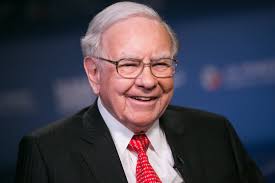



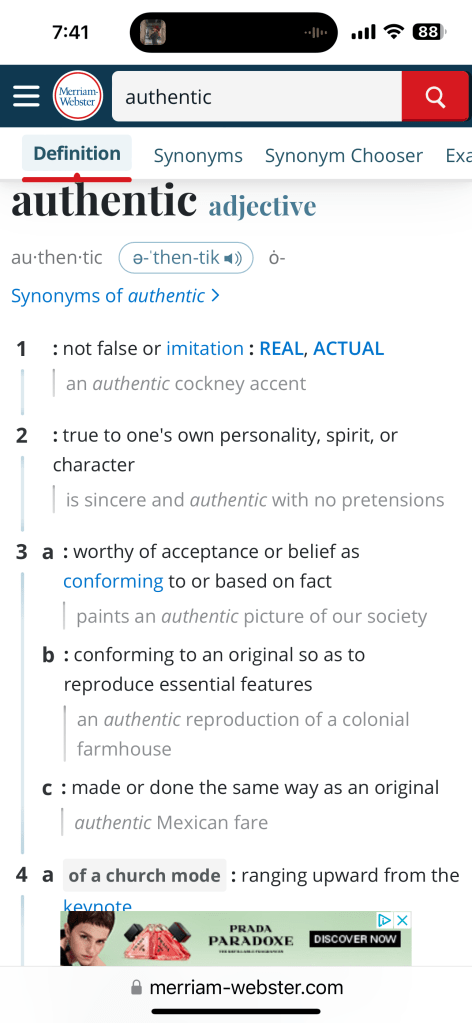




 Diversity & Disruption with Shannon Pruitt