“Imagination is not only the uniquely human capacity to envision that which is not, and therefore the fount of all invention and innovation. In its arguably most transformative and revelatory capacity, it is the power to that enables us to empathize with humans whose experiences we have never shared.” ~ J. K. Rowling
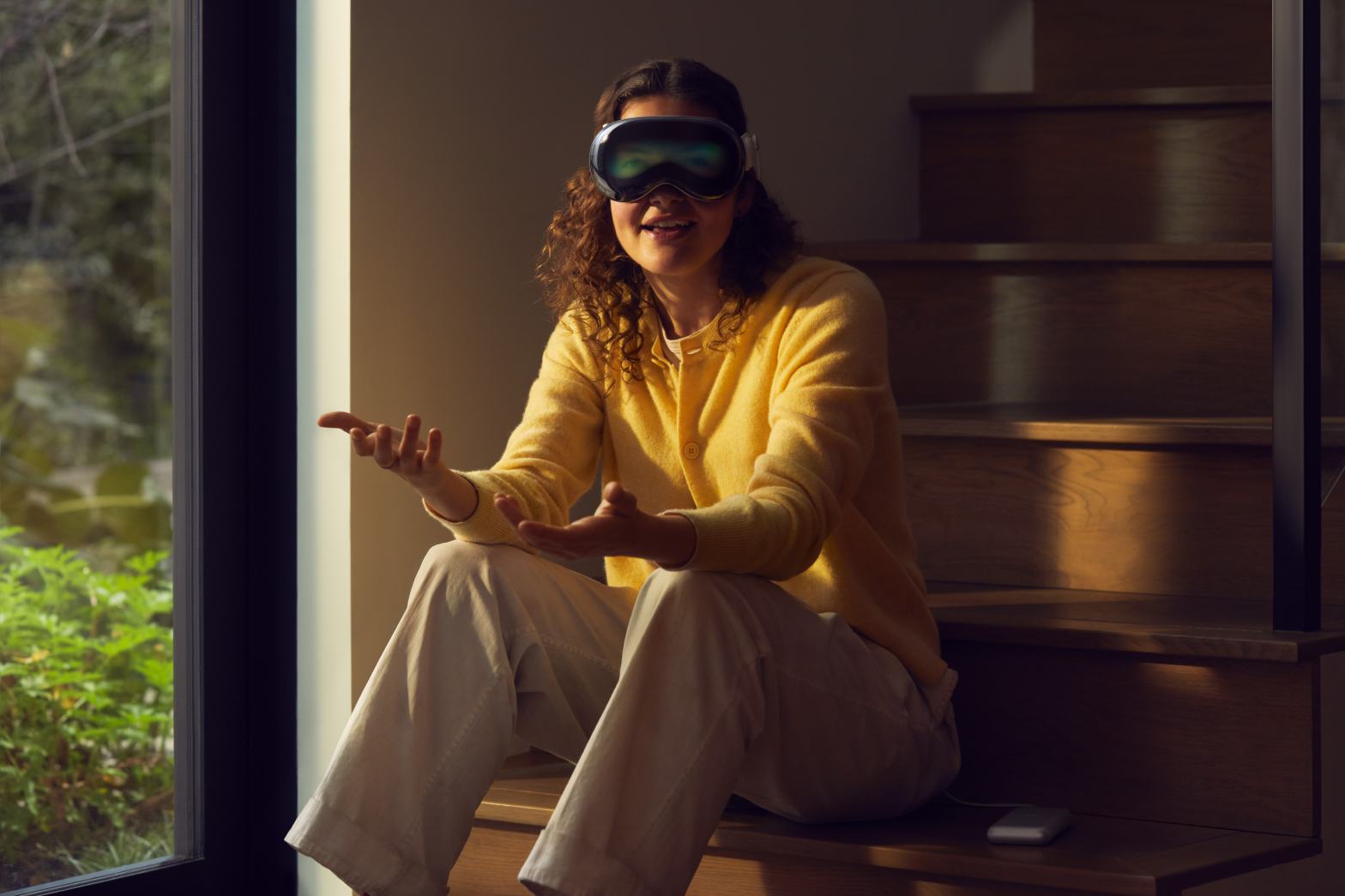
Not to be outdone in the accelerating conversation of AI, “Artificial Intelligence” and Machine Learning, Apple’s Tim Cook took the stage on Monday to finally unveil the much anticipated “Vision Pro” Mixed Reality headset on Monday. The first major launch since it released the Air Pods Pro in 2016. While we have all anxiously awaited the hardware itself to understand how Mixed Reality shows up on one’s face with options for AR and VR experiences, we know that this device, like all Apple devices is a conduit for content and experiences further enhancing their our consumer ecosystem. According to Tim Cook, this is Apple’s first device that “you look through not at.” Apple is calling the Vision Pro the onset of spatial computing, and well, in it’s debut, while speculation persists before it’s release to market at scale in 2024 at a price point of $3500, it’s highly likely that with 5,000 patents filed in the development of the Vision Pro, Apple will make what Apple thinks is possible.
The price point alone makes this product more of a luxury and early adopter device, however, the experience of it is what is in the future at scale is to be imagined. The Vision Pro is controlled with a the users eyes, hands and voice bringing new levels of accessibility and opportunity for many who may have struggled with accessing with precision these forms of technology in the past. Since the launch, and given the time it took for Apple to release this much anticipated product, I have been thinking about how the diversity of thought, background, experiences that set the stage for the new Apple headset, how it can can cause disruption, and the opportunity:
As a mother of a daughter with Angelman Syndrome, presenting with significant cognitive and motor skill disabilities, I am very excited about the possibility of this device and others like it and what it will create for people like Emma and the people that love and support them in their daily lives. While, I am sure this wasn’t necessarily at the forefront of the 5,000 patents filed to develop Vision Pro, I am keenly aware that the diverse group of developers, engineers, executives, early users has surely and profoundly impact the development of the new Apple headset.
Why do I say that?
Because diverse humans and thinking and brainstorming and collaboration creates empathy, and by embracing empathy, we can ensure that the headset truly caters to the diverse needs and experiences of users. It is through this lens of empathy that we can explore the potential disruptions that arise from the intersection of diversity and innovation. Here are some key insights to consider:
- User Experience: By actively incorporating perspectives from individuals with diverse backgrounds, abilities, and preferences, the Apple headset that goes beyond mere functionality. This empathetic approach enables us to design a truly inclusive and immersive user experience. Through diverse thinking, they can disrupt the market by developing a headset that is accessible and customizable, addressing the unique needs of diverse user segments. The opportunity is for every user to feel seen, heard, and empowered through their interactions with the headset.
- Content Creation: Diverse thinking allows us to bring together content creators and developers from various backgrounds, fostering a tapestry of voices and experiences. This approach disrupts the traditional paradigm of content creation and consumption. By incorporating diverse perspectives, the Apple headset offers the possibility of innovative and culturally relevant content that resonates with a broad audience. The power of empathy-driven creativity can redefine storytelling, gaming experiences, and multimedia consumption, offering users a more inclusive and emotionally impactful virtual reality (VR) or augmented reality (AR) environment.
- Application Ecosystem: I believe that an empathetic approach to the development of the Apple headset can shape a disruptive and expansive application ecosystem. By engaging developers from diverse backgrounds and disciplines, we can foster the creation of applications that cater to different industries and user needs. This ecosystem embraces diversity of thought and disrupts various sectors, such as entertainment, education, healthcare, and architecture, by revolutionizing how we interact with and leverage immersive technologies. The ultimate goal can be to empower users with a range of applications that cater to their diverse interests, aspirations, and professional needs.
- Ethical Considerations: Infusing empathy into the development process ensures proactively addressing ethical considerations associated with the Apple headset. Involving individuals with diverse ethical backgrounds and perspectives shapes a product that aligns with a wide range of societal values. A commitment to empathy-driven ethics should be reflected in the design, privacy features, data handling, and accessibility of the headset. Through this empathetic approach, Apple can continue setting a new standard for responsible and inclusive technology development, fostering trust among users and stakeholders.
- Market Expansion: By embracing diversity of thinking, businesses can gain a deeper understanding of different communities and identify untapped market segments. As a global company, this is particularly important, but the truth is that even if you are US-based, cultural understanding is more important than ever before. By 2040, the Black, US Hispanic, and Asian American population will represent the equivalent of the 3rd largest global economy with a whopping $5T in spending power. Through empathy, we can address the needs of diverse demographics, creating an Apple headset, app ecosystem, and content offering that resonates with people from all walks of life. This empathetic approach allows Apple to disrupt the market by expanding our customer base and reaching individuals who may have previously felt overlooked or underrepresented.
While this post is about the Vision Pro, the reality is that Apple and all technology and content companies must strive to create a more inclusive and accessible product suite and offering that brings the magic of immersive technology to a diverse range of users.
While the technology itself is impressive and amazing, the journey of development and the incorporation of empathy is at the core of my fascination for this intersection between diversity of thinking and disruption. By embracing empathy, we can foster a user experience that celebrates diversity, revolutionizes content creation, develops a diverse application ecosystem, addresses ethical considerations, and reaches new market segments. The opportunity to include this notion in its Go TO Market approach will reinforce Apple’s position as a leader in the immersive technology space, setting new benchmarks for innovation, inclusivity, and above all, empathy.
As a human, a consumer, and a mother, this technology is one that creates an imagination for a different kind of future for all of my children, but most notably Emma. With the fact that 1 in 4 people have a disability in today’s world, diversity and empathy will play a critical role in development and the opportunities for brands and marketers of the future. And for our children, the notion of if you can see it you can be it. Imagine a world of AR (Augmented Reality), where you can literally see you dreams in the world in front of you, or transitioning a VR (Virtual Reality) where you can experience or participate in an activity you might have only dreamed would be possible one day. Overlay the possibility of AI for personalized Education, Healthcare and Artistry and all the innovation will be to use diversity to envision a world that is not, YET.
What an inspiring time to be alive. Let’s keep coming together to imagine what is not to create a more accessible future for us all.

